Fruit
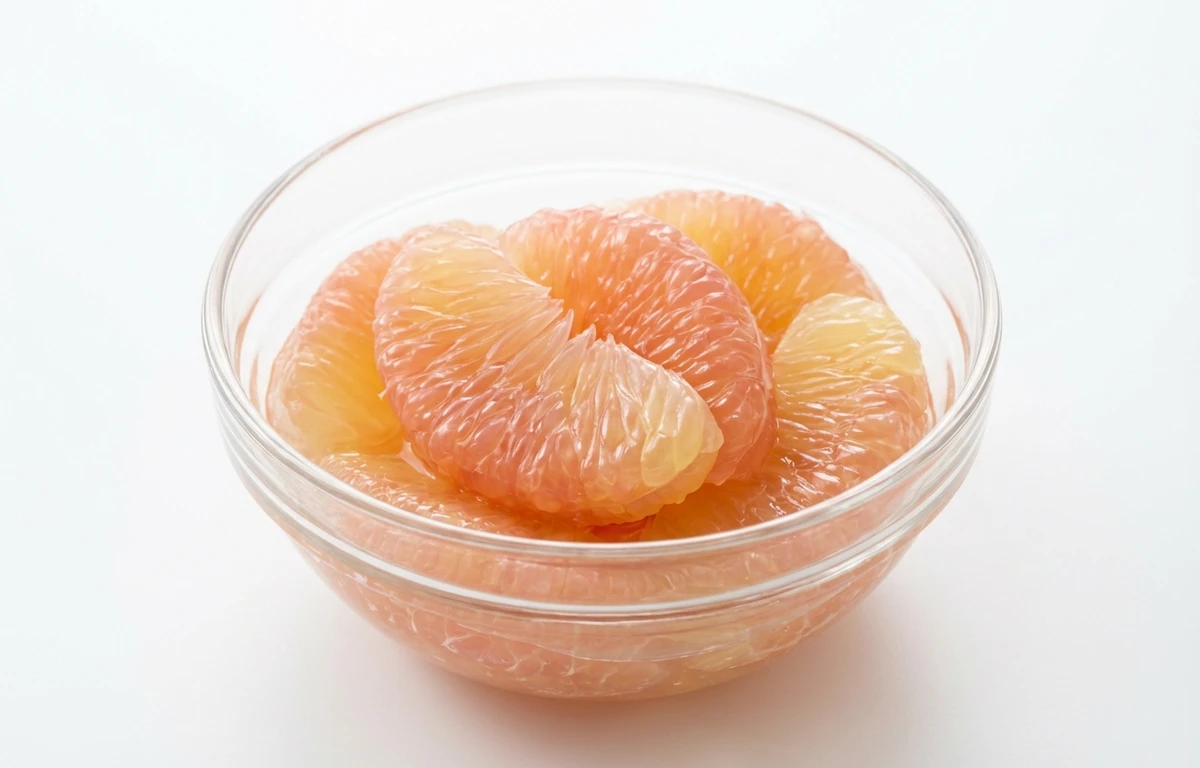
canned grapefruit sections.
VegetarianVeganGluten-freeDairy-freeNut-freePeanut-freeSoy-freeEgg-freeShellfish-freeHoney-freeAlcohol-free
SERVING
CALORIES
36
PROTEIN
0.58g
CARBS
9.2g
FAT
0.10g
FIBER
0.40g
NUTRITION PROFILE · per 100 g
Everything in this ingredient.
MACRONUTRIENTS
Calories36kcal—
Protein0.58g1%
Carbohydrates9.2g3%
Fiber0.40g1%
Sugar8.8g18%
Total fat0.10g0%
Saturated fat0.01g0%
Trans fat0g—
Cholesterol0mg0%
Water89.8g—
MINERALS
Sodium2.0mg0%
Potassium132mg3%
Calcium15mg1%
Iron0.41mg2%
Magnesium10mg2%
Phosphorus10mg1%
Zinc0.09mg1%
Copper0.07mg8%
Manganese0.01mg0%
Selenium0.90µg2%
VITAMINS
Vitamin A0µg0%
Vitamin C21.8mg24%
Vitamin D0µg0%
Vitamin E0.09mg1%
Vitamin K0µg0%
Thiamin (B1)0.04mg3%
Riboflavin (B2)0.02mg2%
Niacin (B3)0.25mg2%
Pantothenic acid (B5)0.12mg2%
Vitamin B60.02mg1%
Folate (B9)9.0µg2%
Vitamin B120µg0%
%DV based on a 2,000 cal diet. Source: USDA FoodData Central. A dash in the %DV column means there’s no established Daily Value for that nutrient.
MEASUREMENT CONVERSIONS
How much is what.
1 cup244g
1 tablespoon15.3g
1 teaspoon5.1g
1 ml1g
1 liter1016.7g
HEALTH BENEFITS
Why eat it.
- ✓Excellent source of Vitamin C, which is crucial for immune system support and skin health.
- ✓Contains antioxidants like naringenin, which may help protect cells from oxidative damage.
- ✓Provides hydration due to its high water content, even in canned form.
- ✓Offers dietary fiber that can aid in digestion, though typically less than fresh grapefruit.
COOKING TIPS
In the kitchen.
- 1Drain the sections well before adding to green salads, fruit salads, or yogurt to prevent excess liquid from making the dish soggy.
- 2Use the liquid from cans packed in 100% juice as a base for vinaigrettes, marinades for poultry or fish, or as a liquid component in smoothies.
- 3Gently fold into cottage cheese or Greek yogurt for a simple and refreshing snack or light breakfast.
- 4Incorporate into retro desserts like ambrosia salad or use as a bright, acidic topping for cheesecakes or pavlovas.
STORAGE
Keep it fresh.
- Store unopened cans in a cool, dark, and dry place like a pantry. They are typically shelf-stable for 1-2 years; always check the expiration date.
- After opening, transfer the grapefruit and its liquid to an airtight, non-metallic container (e.g., glass or plastic) and refrigerate for up to 5-7 days.
FAQ
Frequently asked questions.
Are canned grapefruit sections healthy?
Yes, canned grapefruit sections are a healthy choice as they are an excellent source of Vitamin C and antioxidants like naringenin. They support immune function and skin health while being naturally low in calories and fat. For the healthiest option, choose varieties packed in water or 100% juice rather than heavy syrup.
How many calories and carbs are in canned grapefruit sections?
A 100g serving typically contains about 36 calories and 9.15g of carbohydrates. It is a low-calorie fruit option that provides a small amount of dietary fiber, making it a light snack or addition to meals.
Does canned grapefruit interact with medications?
Yes, like fresh grapefruit, the canned version contains compounds that can interfere with the metabolism of certain medications, such as statins and blood pressure drugs. If you are taking prescription medication, consult your doctor before adding grapefruit to your diet.
Are canned grapefruit sections vegan and gluten-free?
Yes, canned grapefruit sections are naturally vegan and gluten-free. They consist of fruit, water or juice, and sometimes citric acid or sugar, none of which contain animal products or gluten proteins.
Can diabetics eat canned grapefruit sections?
Diabetics can enjoy canned grapefruit, but it is crucial to select 'no sugar added' or 'packed in water' varieties. Grapefruit has a relatively low glycemic index, but the heavy syrup found in some canned versions can cause unwanted blood sugar spikes.
How do canned grapefruit sections taste compared to fresh?
Canned grapefruit is usually less bitter than fresh grapefruit because the bitter white pith and membranes are completely removed. The sections are sweet-tart and have a softer, more uniform texture than fresh fruit.
How should I store canned grapefruit after opening?
Once the can is opened, transfer the grapefruit and its liquid into an airtight glass or plastic container. Do not store it in the original metal can; keep it refrigerated and consume it within 3 to 4 days.
Can I use the liquid inside the can?
Yes, the liquid is infused with grapefruit flavor and can be used in smoothies, cocktails, or as a base for salad dressings. If the fruit is packed in heavy syrup, you may want to discard it or use it sparingly to limit sugar intake.
What are some common ways to use canned grapefruit sections?
They are excellent in green salads with avocado, mixed into fruit salads, or served as a topping for yogurt and cottage cheese. They can also be used in desserts or as a quick, no-prep breakfast side.
Is canned grapefruit good for weight loss?
Canned grapefruit is very weight-loss friendly due to its high water content and low calorie density. It provides a sense of fullness with very few calories, provided you choose versions without added sugars or heavy syrups.