Beverage
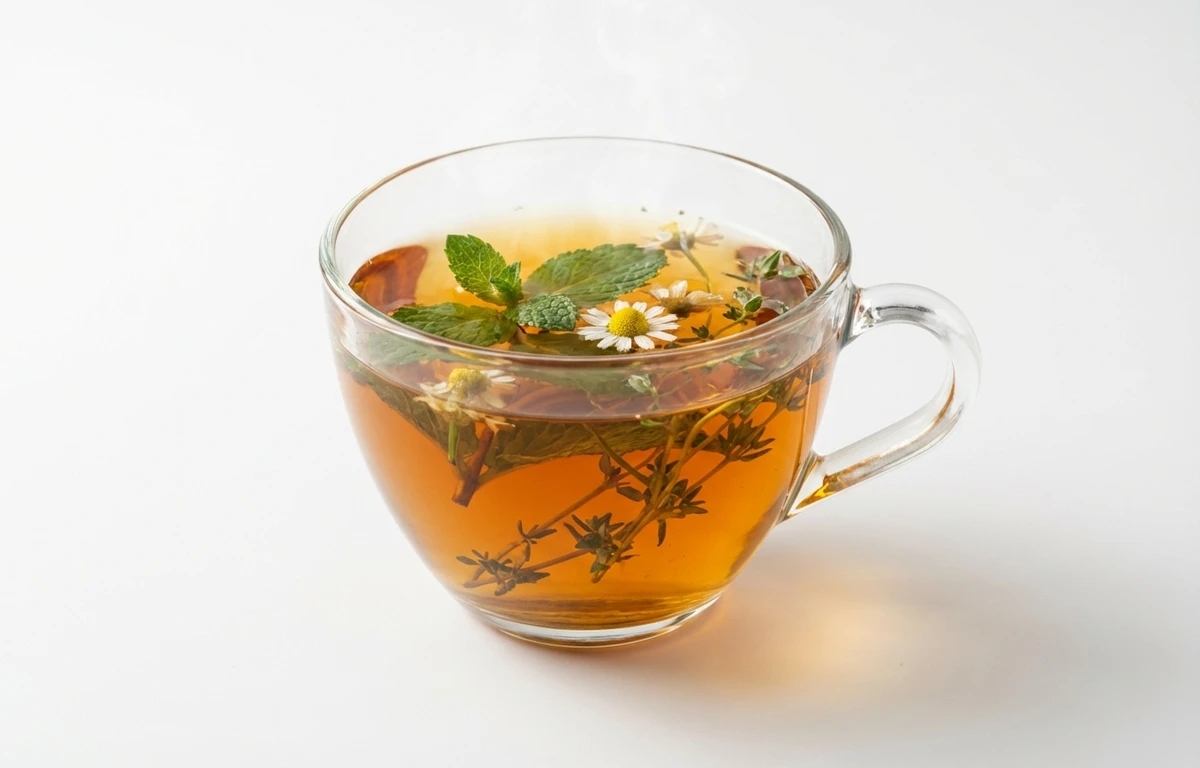
brewed herb tea.
VegetarianVeganGluten-freeDairy-freeNut-freePeanut-freeSoy-freeEgg-freeShellfish-freeHoney-freeAlcohol-free
ALSO KNOWN AS
herb tea
SERVING
CALORIES
1
PROTEIN
0g
CARBS
0.20g
FAT
0g
FIBER
0g
NUTRITION PROFILE · per 100 g
Everything in this ingredient.
MACRONUTRIENTS
Calories1.0kcal—
Protein0g0%
Carbohydrates0.20g0%
Fiber0g0%
Sugar0g0%
Total fat0g0%
Saturated fat0g0%
Trans fat0g—
Cholesterol0mg0%
Water99.7g—
MINERALS
Sodium1.0mg0%
Potassium9.0mg0%
Calcium2.0mg0%
Iron0.08mg0%
Magnesium1.0mg0%
Phosphorus0mg0%
Zinc0.04mg0%
Copper0.02mg2%
Manganese0.04mg2%
Selenium0µg0%
VITAMINS
Vitamin A0µg0%
Vitamin C0mg0%
Vitamin D0µg0%
Vitamin E0mg0%
Vitamin K0µg0%
Thiamin (B1)0.01mg1%
Riboflavin (B2)0mg0%
Niacin (B3)0mg0%
Pantothenic acid (B5)0.01mg0%
Vitamin B60mg0%
Folate (B9)1.0µg0%
Vitamin B120µg0%
%DV based on a 2,000 cal diet. Source: USDA FoodData Central. A dash in the %DV column means there’s no established Daily Value for that nutrient.
MEASUREMENT CONVERSIONS
How much is what.
1 cup237g
1 tablespoon14.8g
1 teaspoon4.9g
1 ml1g
1 liter987.5g
HEALTH BENEFITS
Why eat it.
- ✓Provides hydration as a flavorful, often calorie-free beverage.
- ✓Many varieties, such as chamomile and lavender, promote relaxation and may aid in sleep.
- ✓Herbs like peppermint, ginger, and fennel can help soothe the digestive system and alleviate discomfort.
- ✓Rich in antioxidants and phytochemicals that can help protect the body against oxidative stress.
COOKING TIPS
In the kitchen.
- 1Adjust steeping time and water temperature based on the herb. Delicate flowers and leaves (like chamomile or mint) require lower temperatures (around 200°F/93°C) for 3-5 minutes, while roots and barks (like ginger or cinnamon) benefit from boiling water and longer steeping (5-10+ minutes).
- 2Use strongly brewed herbal tea as a flavorful liquid base for cooking grains like rice or quinoa, or for poaching fruits like pears and apples.
- 3To make iced tea, brew a concentrated version using double the amount of herbs, then pour over a full glass of ice to prevent dilution.
- 4Create custom blends by combining complementary herbs, such as soothing chamomile with bright lemon balm, or spicy ginger with earthy turmeric.
STORAGE
Keep it fresh.
- Refrigerate freshly brewed tea in a sealed, airtight container for up to 3 days to maintain freshness and prevent absorption of other fridge odors.
- For longer storage, freeze brewed tea in ice cube trays. Use the cubes to quickly chill hot tea or add flavor to water and other drinks.
FAQ
Frequently asked questions.
Is brewed herb tea healthy?
Yes, brewed herb tea is very healthy as it is virtually calorie-free and rich in antioxidants. It provides excellent hydration and contains various phytochemicals that help protect the body against oxidative stress and inflammation.
Does brewed herb tea contain caffeine?
Most brewed herb teas are naturally caffeine-free because they are made from dried fruits, flowers, or herbs rather than the Camellia sinensis plant. This makes them an excellent choice for evening consumption or for those who are sensitive to stimulants.
Is brewed herb tea good for weight loss?
Brewed herb tea is an excellent aid for weight loss because it contains only 1 calorie per 100g and zero fat. It serves as a flavorful, hydrating alternative to sugary sodas or juices, helping to reduce overall daily calorie intake.
Is brewed herb tea vegan and gluten-free?
Yes, pure brewed herb tea is naturally vegan and gluten-free as it consists only of plant-based herbs and water. However, always check the packaging of pre-mixed flavored blends for any added barley malt or dairy-derived flavorings.
Is brewed herb tea keto-friendly?
Yes, brewed herb tea is highly keto-friendly with only 0.2g of carbohydrates per 100g. As long as you consume it plain without adding sugar, honey, or milk, it will not impact ketosis or your daily carb limit.
How do you brew the perfect cup of herbal tea?
To brew herbal tea, use boiling water (212°F/100°C) and steep for 5 to 10 minutes depending on the desired strength. Unlike green or black tea, herbal infusions rarely become bitter with longer steeping times, allowing for maximum flavor and nutrient extraction.
Can I drink brewed herb tea cold?
Absolutely. Brewed herb tea can be served chilled as iced tea, which is a refreshing and hydrating beverage. You can brew it hot and then refrigerate it, or use a cold-brew method by steeping the herbs in cold water for several hours.
How long does brewed herb tea last in the fridge?
Once brewed, herb tea should be stored in a sealed container in the refrigerator and consumed within 3 to 5 days. For the best flavor and to prevent bacterial growth, it is recommended to drink it as fresh as possible.
Can brewed herb tea help with sleep or digestion?
Yes, specific varieties are known for these benefits. Chamomile and lavender teas are popular for promoting relaxation and sleep, while peppermint, ginger, and fennel teas are effective at soothing the digestive system and reducing bloating.
How do I know if my brewed herb tea has gone bad?
You can tell brewed herb tea has spoiled if it develops a cloudy appearance, a sour or off-smell, or if you see any visible mold growth. If the flavor tastes flat or unusual compared to when it was freshly brewed, it is best to discard it.