Dairy6 recipes
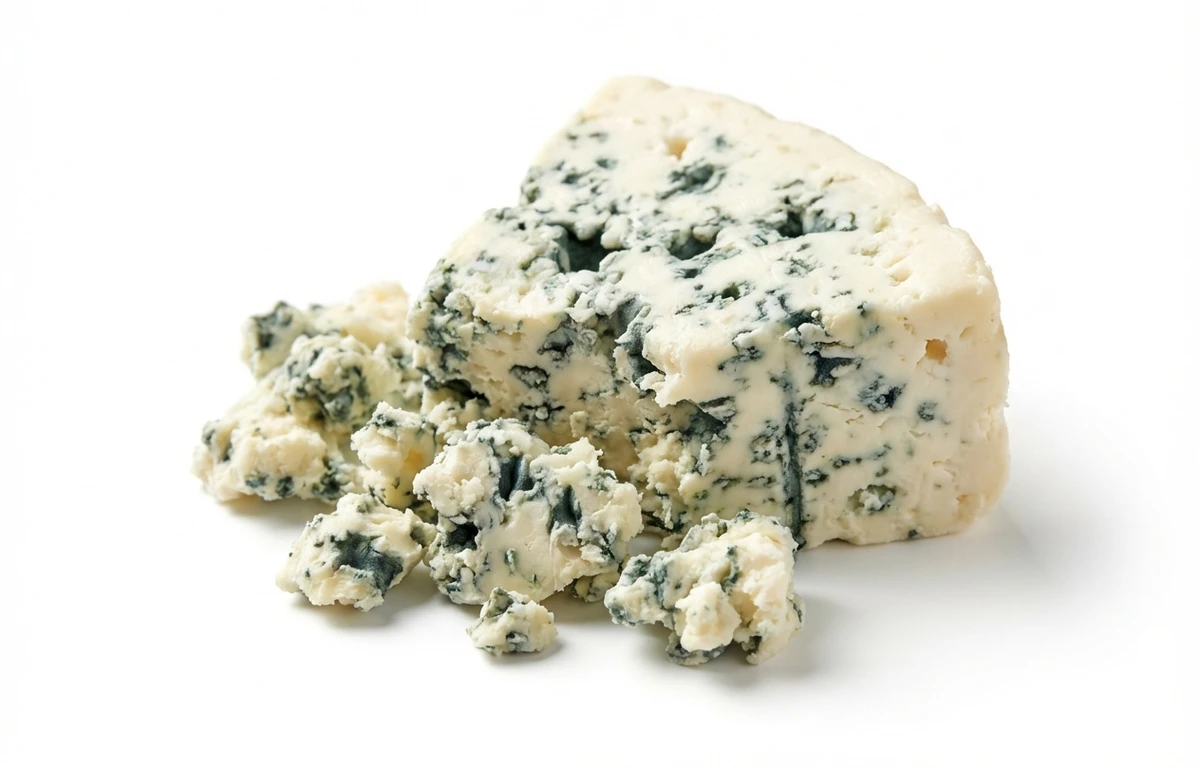
blue cheese.
VegetarianVeganGluten-freeDairy-freeNut-freePeanut-freeSoy-freeEgg-freeShellfish-freeHoney-freeAlcohol-freeFermented
ALSO KNOWN AS
bleu cheese
SERVING
CALORIES
353
PROTEIN
21.4g
CARBS
2.3g
FAT
28.7g
FIBER
0g
NUTRITION PROFILE · per 100 g
Everything in this ingredient.
MACRONUTRIENTS
Calories353kcal—
Protein21.4g43%
Carbohydrates2.3g1%
Fiber0g0%
Sugar0.50g1%
Total fat28.7g37%
Saturated fat18.7g94%
Trans fat0g—
Cholesterol75mg25%
Water42.4g—
MINERALS
Sodium1146mg50%
Potassium256mg5%
Calcium528mg41%
Iron0.30mg2%
Magnesium23mg5%
Phosphorus387mg31%
Zinc2.7mg25%
Copper0.04mg4%
Manganese0.01mg0%
Selenium14.5µg26%
VITAMINS
Vitamin A198µg22%
Vitamin C0mg0%
Vitamin D0.50µg3%
Vitamin E0.25mg2%
Vitamin K2.4µg2%
Thiamin (B1)0.03mg3%
Riboflavin (B2)0.38mg29%
Niacin (B3)1.0mg6%
Pantothenic acid (B5)1.7mg35%
Vitamin B60.17mg10%
Folate (B9)36µg9%
Vitamin B121.2µg51%
%DV based on a 2,000 cal diet. Source: USDA FoodData Central. A dash in the %DV column means there’s no established Daily Value for that nutrient.
MEASUREMENT CONVERSIONS
How much is what.
1 cup135g
1 tablespoon9g
1 teaspoon3g
1 oz28.4g
1 lb453.6g
HEALTH BENEFITS
Why eat it.
- ✓Excellent source of calcium for bone health
- ✓High protein content supports muscle maintenance
- ✓Contains Vitamin B12 for nerve function
- ✓Provides beneficial bioactive peptides
- ✓Rich in phosphorus for energy metabolism
COOKING TIPS
In the kitchen.
- 1Bring to room temperature for 30-60 minutes before serving to enhance flavor and texture
- 2Crumble into hot sauces at the very end of cooking to prevent the cheese from becoming oily
- 3Pair with sweet elements like honey, figs, or pears to balance the salty, pungent profile
STORAGE
Keep it fresh.
- Wrap in parchment or wax paper, then loosely in foil to allow the cheese to breathe
- Store in the vegetable crisper drawer where temperature and humidity are most stable
- Keep away from other foods as it easily absorbs and emits strong odors
FAQ
Frequently asked questions.
How long does blue cheese last in the fridge?
When properly wrapped, blue cheese typically lasts 3 to 4 weeks in the refrigerator.
Can you freeze blue cheese?
Yes, but it becomes very crumbly and may lose some flavor. It is best used for cooking or dressings after thawing rather than fresh eating.
Is the mold in blue cheese safe to eat?
Yes, the blue veins are created by Penicillium cultures, which are safe for human consumption and give the cheese its characteristic flavor.
How can I tell if blue cheese has gone bad?
Look for pink, green, or fuzzy grey mold that isn't part of the original veins, or a strong ammonia-like smell that persists after airing out.
What is a good substitute for blue cheese?
Feta offers a similar saltiness, while Gorgonzola or Roquefort are the closest flavor matches. For a milder option, try goat cheese.
Is blue cheese gluten-free?
Most blue cheese is gluten-free. While some mold cultures were historically grown on bread, most modern production uses gluten-free mediums.
Why is blue cheese so salty?
Salt is used during production to control the growth of the mold and bacteria, as well as to enhance the final flavor profile.
What are the best food pairings for blue cheese?
It pairs excellently with walnuts, honey, apples, pears, steak, and dessert wines like Port or Sauternes.
RECIPES
Cook with blue cheese.
6 recipes · sorted by what’s quick